Reframing California’s “Trust Desert” into a United Voice
Actualizado: 27 feb


San Diego
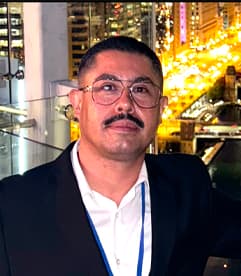
By Hector Felix, Editor
The Ancestral Circle
Last month, a historic coalition of Native American, Black, Latino, and AAPI media leaders stood on the sacred ground of the Pala Reservation.
I attended this media summit in San Diego with a purpose that was both personal and professional: to reconnect with my own Indigenous heritage and to better understand the structural barriers that continue to place our communities at risk. As a journalist covering the Coachella Valley, I felt a deep responsibility to listen, learn, and bring back knowledge that could strengthen emergency communication and trust for the Indigenous families who call this region home.
Standing there, we gathered to confront the “Trust Desert”—a systemic communication failure that leaves our most essential residents invisible during California’s increasingly frequent climate catastrophes.
The “Relative” Reality: Returning to Shared Soil
For centuries, these populations have endured in the shadows, yet for too long, California has viewed Indigenous farmworkers—those who speak Purépecha, Náhuatl, Mixtec, and Cahuilla—as “newcomers” or “migrants”. It is time for a radical and poetic reframing. These individuals are relatives returning to shared Indigenous soil that predates modern nation-states.
Whether they are Kumeyaay, Luiseño, or the Mixteco workers whose labor picks the food that sustains our nation, they share an ancestral connection to this land. To leave these relatives behind in a “Trust Desert” of English-only alerts is not just a policy failure; it is a betrayal of our shared kinship and a perpetuation of social injustice.
The Human Drama: Linguistic Invisibility
The human toll of this exclusion is visceral. While state authorities focus on Spanish-language alerts, the Purépecha or Mixteco speaker remains in a total information blackout. Official alert systems—text messages and mobile applications—are issued primarily in English and, at best, Spanish, rendering them incomprehensible to thousands.
I spoke with an Indigenous worker in our region whose primary language is Purépecha. She lives in a world where her only “fail-safe” during a wildfire is her children. “When there are wildfire or evacuation alerts, my children are the ones who tell me what to do because I do not understand the messages in English,” she told me. A system that relies on a child’s translation to save a family’s life is a system in crisis.
The Silence is the Message
Social injustice continues when those in power refuse to answer for these gaps. When we requested comment from the Riverside County Office of Emergency Services and CAL FIRE regarding their “Language Justice” protocols, we received only silence. This silence is a symptom of the “Trust Desert” itself—a refusal to recognize humanity and the basic right to life-saving information for those who feed the nation.
As documented by researchers like Dr. Seth M. Holmes and organizations like MICOP and CRLA, these structural inequalities are not accidental; they are the result of an unresolved obligation to a workforce that faces chronic technological and language barriers.
The Solution: One Fist, One Voice

As Rose Davis of Indian Voices emphasized at Pala, we are uniting our efforts—bringing “all the fingers into one fist”—to exercise our Indigenous Intelligence. We are actively building Sovereign Media Bridges by leveraging trusted platforms like Indian Voices, Indigenous Network, Rez Radio (Pala 91.3 FM), and EL INFORMADOR DEL VALLE. These outlets are crucial not only for addressing the deficiencies of the current digital grid but also for advocating, alongside our media partners, for the following immediate actions:
Language Justice Mandate: Automated emergency alerts must be provided in the region’s primary Indigenous languages.
Trusted Community Liaisons: Official emergency liaison roles must be established by hiring and training community promotores.
Essential Resource Allocation: Ethnic media hubs must be recognized and funded as critical public service providers.
We sustain California’s land through our labor. It is a fundamental right that the state finally reciprocates by sustaining our lives with the essential resources and information we deserve


kipd


Comentarios